Holarrhena antidysenterica (L.) Wall. |
| |
|
|
Botanical Name |
: |
Holarrhena antidysenterica (L.) Wall. |
English
Name |
: |
Tellicherry Bark and Coneru |
Synonym(s) |
: |
Holarrhena pubescens (BUCH.-HAM.) WALLICH EX DO. , Echites pubescens Buch.-Ham. |
Family |
: |
Apocynaceae |
| |
General Info
| Description |
 |
|
Deciduous tree or large shrub; leaves sessile or subsessile, broadly ovate to elliptic-oblong, abruptly acuminate, often unequal, rounded or obtuse at base, lateral nerves 10 to 15 pairs, arching near the margin; flowers white, bracts small, follicles 20 to 42 by 0.8 to 1.2 cm; seeds up to 1 cm long, linear-oblong, coma about twice as long as seeds, seeds brown. |
| Herb Effects |
|
|
Acrid, antidysenteric, anthelmintic, astringent, reduces fever, tonic and increases the secretion of gastric juices (bark); slows down the growth of certain bacteria related to tuberculosis (conessine in bark) antiperiodic, aphrodisiac, bitter, carminative, expectorant, febrifuge. |
Chemistry
| Active Ingredients |
|
|
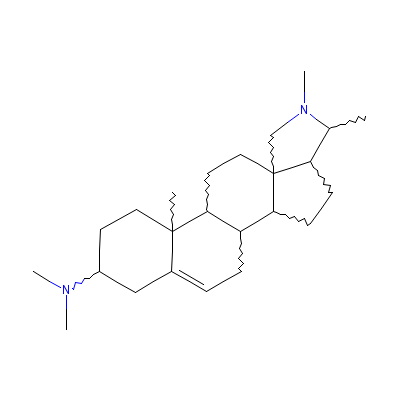
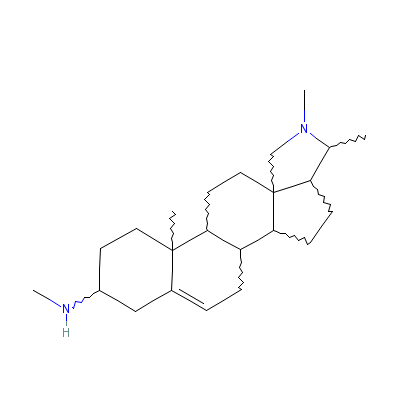
Conessine, connessimine, conkurchine, kurchine, holarrhinene, conarrhinine and isoconcessimine (bark alkaloids). |
| Chemistry
of Active Ingredients |
|
|
|
 |
Name |
CAS# |
IUPAC Name |
Formula |
Structure |
 |
|
| Conessine |
Not Available |
Not Available |
C24H40N2 |
|
| Kurchine |
468-36-0 |
Not Available |
C23H38N2 |
|
|
Pharmacology
| Medicinal Use |
|
|
In dysentery and diarrhea (especially that which is caused by an amoeba) (bark and seed); in jaundice and stones within the bladder, to treat fever, bleeding piles, leprosy and skin diseases, cough, calculi, gravels, wound and diabetes. Bark-powder is used in abdominal and glandular tumours. Fruit has anticancer, anti protozoa, hypoglycaemic, astringent and febrifuge properties. |
| Contraindication |
|
|
Do not take during pregnancy |
| Reference |
|
|
 Sharma, Classical Uses of Medicinal Plants. Sharma, Classical Uses of Medicinal Plants.
Uniyal et al., Medicinal Flora of Garhwal Himalayas.
|
Dealers
Products
|
|













 Return to top