Citrus hystrix H. Perrier, Fortunella sagittifolia K. M. Feng and P. I. Mao
Family
:
Rutaceae
General Info
Description
A treelet that grows up to 2m high with crooked trunk and short stiff spines. Bark is smooth, greenish-yellow, and the inner bark is creamy white. Young stems, petioles, and gynaecium are light green and pubescent. Leaves are simple, spiral, and exstipulate. Petiole is winged. Wings are as broad and similar to the blade. Blade is dotted with oil cells, wavy, glossy, and 2.5cm × 2.2cm – 3.4cm – 2.7cm × 1.9cm. Fruits are bumpy, green, and strongly aromatic.
Herb Effects
As a tonic, anti scurvy, expectorant and antidandruff (fruit juice); carminative (fruit peel)
citronellal, citronellol, nerol and limonene (leaf oil); limonene and beta-pinene (fruit peel oil)
Chemistry
of Active Ingredients
Name
CAS#
IUPAC Name
Formula
Structure
Citronellal
26489-02-1
3,7-dimethyloct-6-en al
C10H18O
Citronellol
26489-01-0
3,7-dimethyloct-6-en -1-ol
C10H20O
Nerol
106-24-1
3,7-dimethylocta-2,6 -dien-1-ol
C10H18O
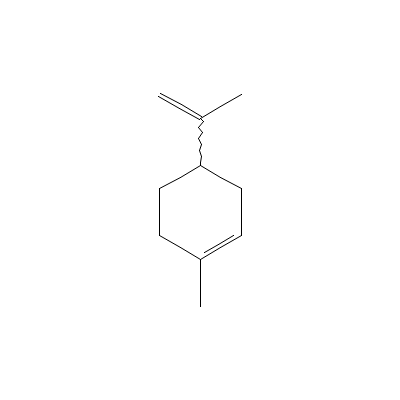
Limonene
9003-73-0
1-methyl-4-prop-1-en -2-yl-cyclohexene
C10H16
Beta-pinene
23089-32-9
6,6-dimethyl-2-methy lidene-norpinane
C10H16
Pharmacology
Medicinal Use
Inhaled to cure nausea and fainting (rind oil); used in treatment of headache and worms in children (rind); to cure stomach pain (fruit peel); to promote gum health (fruit juice).
Reference
Christophe Wiart. Medicinal Plants of Asia and the Pacific, P:216-217, CRC Press, June 2006.Piyachaturawat, P., Glinsukon, T., Chanjarunee, A.,1985. Antifertility effect of Citrus hystrix DC., J Ethnopharmacology, 13(1):105-10.









 Health Remedies







 Return to top